► We Face Two Choices. War or Survival. We Choose Both,
totrade.co/w1 ▪ Exit war while building FEWS™ resilience systems
► Two Paths. We Decide Which One We Build,
totrade.co/w2 ▪ Stable warm state or abrupt disruption
► 99.94% of Earth's History Ran Warm. Our Baseline Is Not Normal,
totrade.co/w3 ▪ Warm Earth as default operating state
► Oil and Coal Did Not Come From Dead Dinosaurs. Here Is the Science,
totrade.co/w4 ▪ Biomass origin under warm high CO₂ conditions
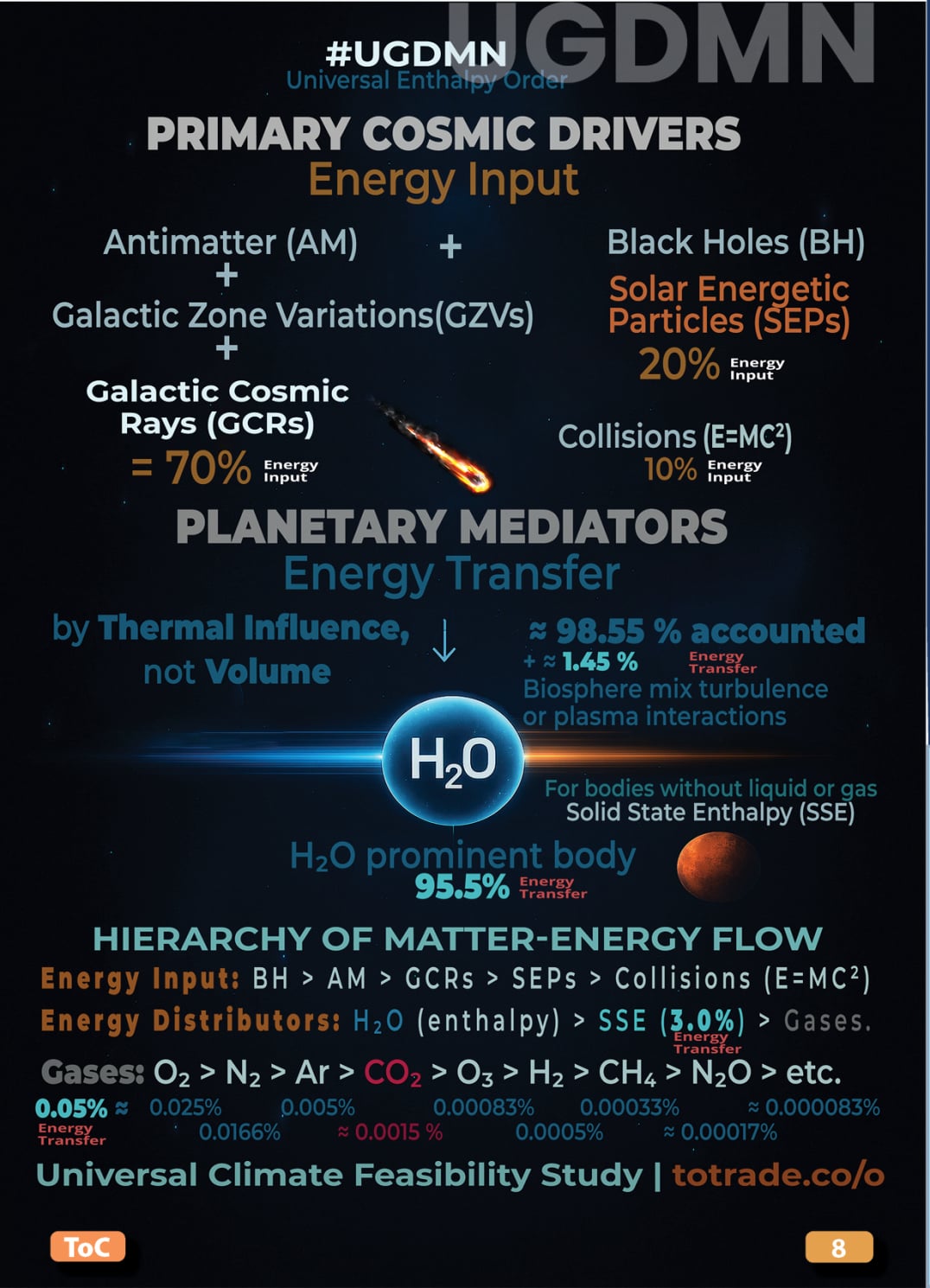
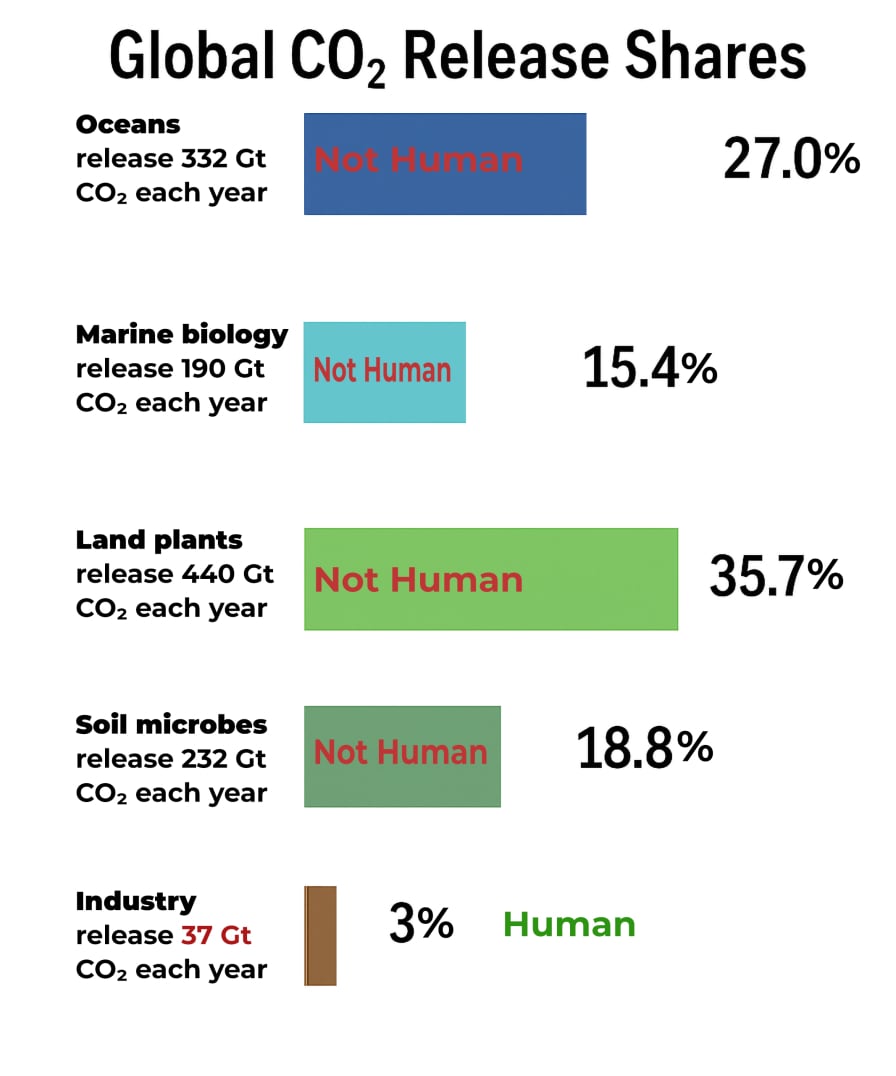
► CO₂ Is 0.0015% of Earth's Thermal Enthalpy. The Rest Is Finance,
totrade.co/w5 ▪ Water and oceans dominate climate control
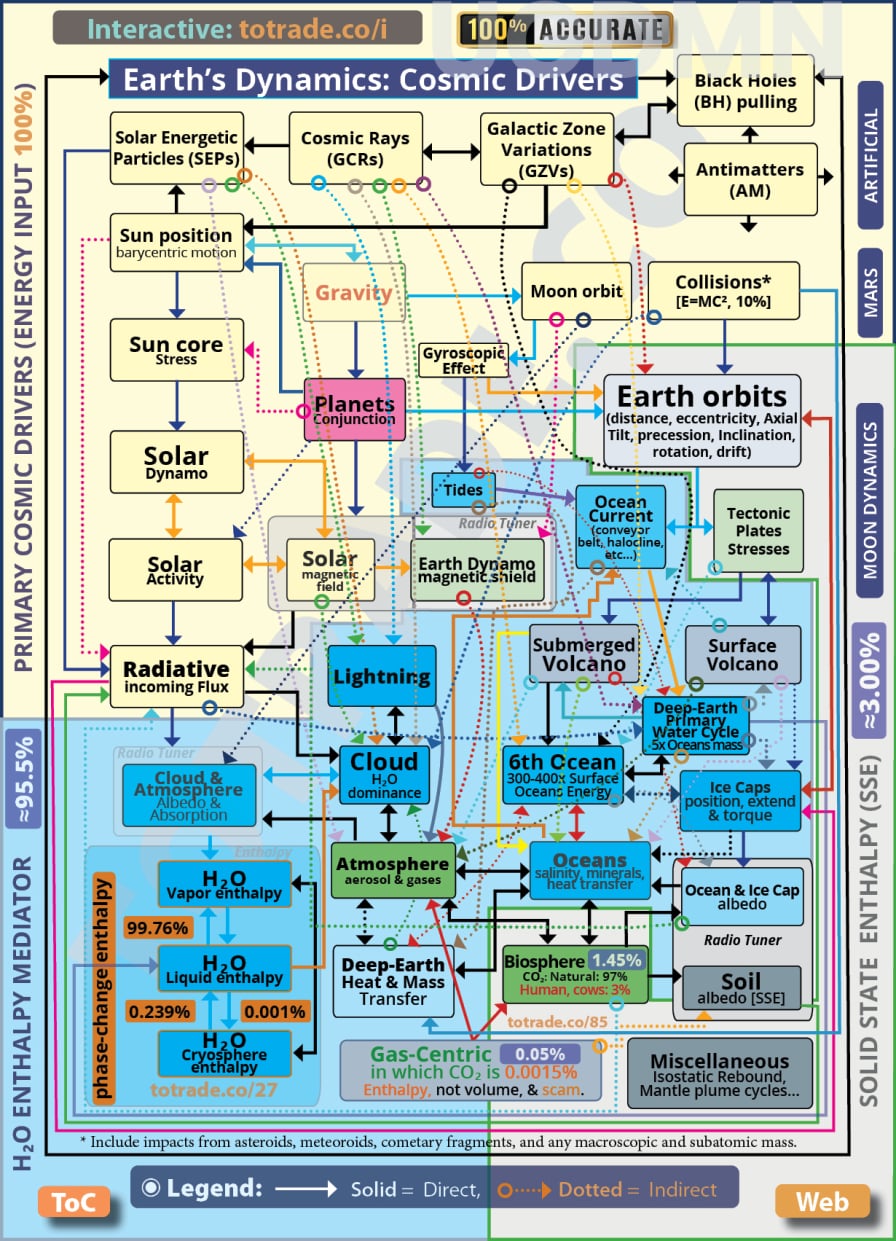
► Climate Is Not Driven by CO₂. It Is Driven by Cosmic Forces,
totrade.co/w6 ▪ GCRs, SEPs, deep Earth as primary drivers
► H₂O vs CO₂: 600,000 to 1. Water Runs the Atmosphere,
totrade.co/w7 ▪ Water phase change governs energy transfer
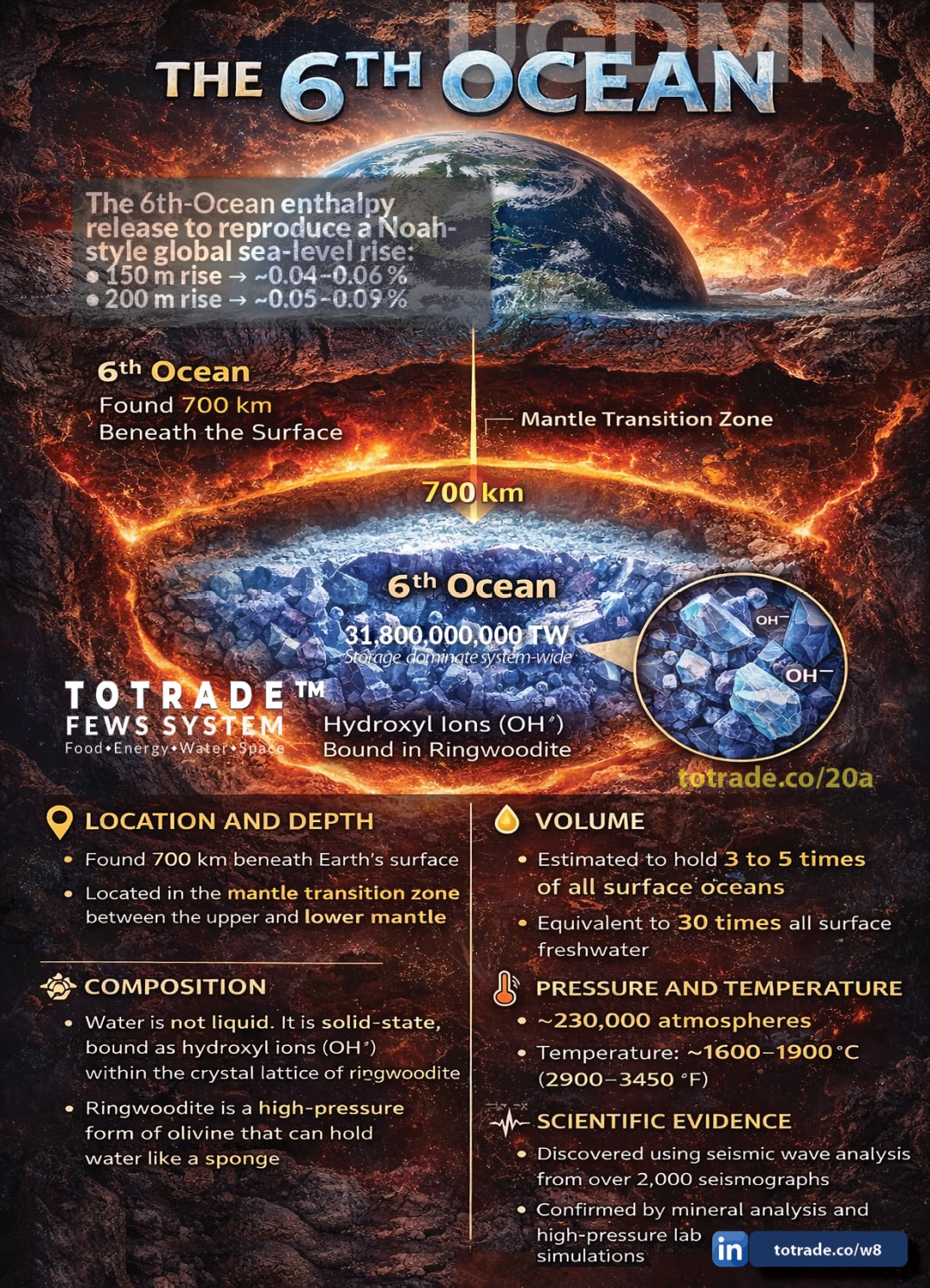
► 700 km Below Us Sits a Water Reserve 3 to 5 Times All Surface Oceans,
totrade.co/w8 ▪ 6th Ocean as major energy reservoir
► Earth Is a Self-Sustaining Planetary Battery. 31.8 Billion TW Stored,
totrade.co/w9 ▪ Core dynamics and continuous charge flow
► Galactic Cosmic Rays Outperform Solar Input in Depth, Ionization, and Impact,
totrade.co/w10 ▪ GCR dominance in penetration and energy
► Solar Energy: 20%. GCRs: 70%. The Numbers Are Not Close,
totrade.co/w11 ▪ System driven by galactic input
► Energy Comes From the Bottom Up. 31.8 Billion TW Stored Below Us,
totrade.co/w12 ▪ Internal storage exceeds surface inputs
► Space to Core. The Full Integrated Energy System of Earth,
totrade.co/w13 ▪ Coupled cosmic to core energy system
► We Are Entering a Magnetic Null Zone. GCR Surge Expected by 2036,
totrade.co/w14 ▪ Rising instability from magnetic weakening
► GCR Flux Exceeds Solar Output. Peak Arrives Around 2036,
totrade.co/w15 ▪ Threshold energy accumulation trend
► Cycle Begins 2025. Strategic Response Required Now,
totrade.co/w16 ▪ Harden infrastructure and prepare systems
► Our Infrastructure Is Not Built for What Is Coming,
totrade.co/w17 ▪ Shift to mobile resilient infrastructure
► Energy Accumulates Beyond Buffering Capacity. The Laws of Thermodynamics Are Clear,
totrade.co/w18 ▪ Threshold leads to abrupt release
► We Are About 10 Years from Threshold. The Chain Is Clear,
totrade.co/w19 ▪ Particle input to system release sequence
► Gulf Conflict Is Regional. Crustal Surge Is Planetary. Both Demand Response,
totrade.co/w20 ▪ Unified multi-hazard preparedness
► Dubai Built on Perception. UGDMN Built on Enthalpy, Ownership, and Civilizational Survival,
totrade.co/w21 ▪ Replace speculative models with enthalpy systems
► Grid Collapse. Nuclear Meltdown. Supply Chaos. Our Current Systems Cannot Absorb a Major Shock,
totrade.co/w22 ▪ Deploy distributed FEWS systems
► To Match 1 GW of Baseload Power, Solar Requires 3.6 GW Plus Massive Storage,
totrade.co/w23 ▪ Design for output reliability
► Laos Is No Longer the Battery of Asia. It Is the Planetary Enthalpy Field,
totrade.co/w24 ▪ Water-rich resilience backbone
► Laos Sits at the Centre of a 3.5 Billion People Connectivity Zone,
totrade.co/w25 ▪ Global hub for water and energy flow
► Asia-Pacific Loses Billions Each Year to Typhoons. We Build the System to Redirect Them,
totrade.co/w26 ▪ Redirect storm energy into water supply
► Extract Geothermal Heat at Moderate Depth. Regulate Global Cooling and Heating Over 10 Years,
totrade.co/w27 ▪ Hydroloop manages heat exchange
► Developers Keep Building Concrete Jungles in Floodplains. We Build for Survival,
totrade.co/w28 ▪ Resilient modular infrastructure
► Robots Plant. Robots Graft. Robots Deliver. All-Season Near-Ripe Fruits to Every Door,
totrade.co/w29 ▪ Automated food production at scale
► The Perfect Line Runs Along 13 Rivers Connected to the Mekong. It Delivers Everything,
totrade.co/w30 ▪ Integrated FEWS corridor
► Heat and Energy on Demand. No Wells. No Fluids. No Surprises,
totrade.co/w31 ▪ GeoLoop™ controls deep-Earth heat
► Hydrocarbon Flows Directed to Build the Future — Not Fund the Past,
totrade.co/w32 ▪ Redirect oil and gas to infrastructure
► 20 Years. No Refuelling. Plug-and-Play. GCR-Ready,
totrade.co/w33 ▪ ArkNuke™ mobile nuclear system
► Airport. Seaport. Dryport. Spaceport. One Integrated Hub. One System,
totrade.co/w34 ▪ ArkPort™ unified logistics
► Infinite Resources. Limitless Energy. Earth-Moon-Mars Connected,
totrade.co/w35 ▪ OrbitalLoop™ space infrastructure
► A 100 km Earth-to-LEO Tower. The Rocket Equation Solved,
totrade.co/w36 ▪ IOS tower enables orbital access
► Laos to MENA: Cold Water Export, Freshwater Pipeline, Renewable Grid — One Corridor,
totrade.co/w37 ▪ Atmospheric water distribution system
► Robot-Built. Human-Ready. The Moon Is Our Next Construction Site,
totrade.co/w38 ▪ Lunar base deployment
► Fast Transactions. Secure Transfers. Rapid Infrastructure Deployment. One Payment Gateway,
totrade.co/w39 ▪ ZED PAY financing backbone
► From BRICS Gold Unit to Off-Planet Capacity Trade System,
totrade.co/w40 ▪ Resilience-based settlement system
► We Are Building the Platform That Moves Humanity to Type I,
totrade.co/w41 ▪ Integrated global infrastructure platform
► Real Assets. Income-Producing Tokens. Diversified Backing. Low Entry,
totrade.co/w42 ▪ Tokenized real asset economy
► VLCC Tankers Return Empty from Qatar. We Fill Them With Nutrient-Rich Freshwater,
totrade.co/w43 ▪ Water export via existing routes
► The MENA Qatari UGDMN System Is Built for Continuity Beyond Cataclysm,
totrade.co/w44 ▪ Continuous FEWS cycle system
► We Plant Trees in Africa. We Do It Before 2036. We Do It from Laos,
totrade.co/w45 ▪ Trees as economic and resilience assets
► We Move Living Rainforests by Rail Across Continents. It Is Already Proven,
totrade.co/w46 ▪ GrowRail™ for large-scale reforestation
► DesertGrow™. GrowGrid™. Ark2036™. The Full Post-Cataclysm Green Recovery System,
totrade.co/w47 ▪ Rapid recovery and reconstruction system